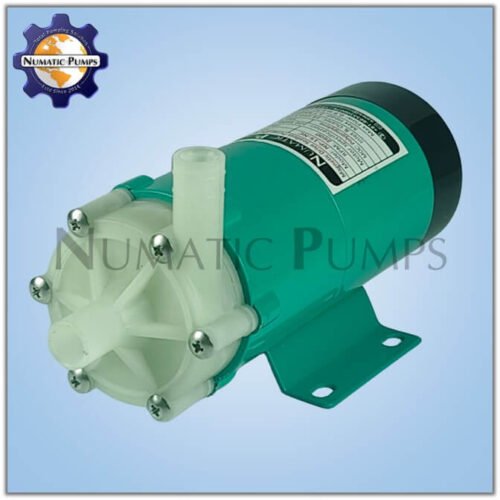
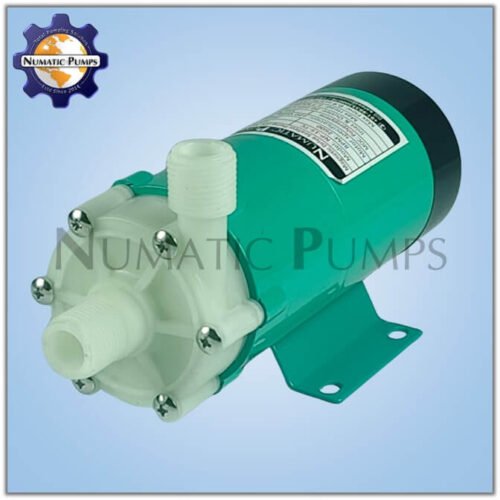
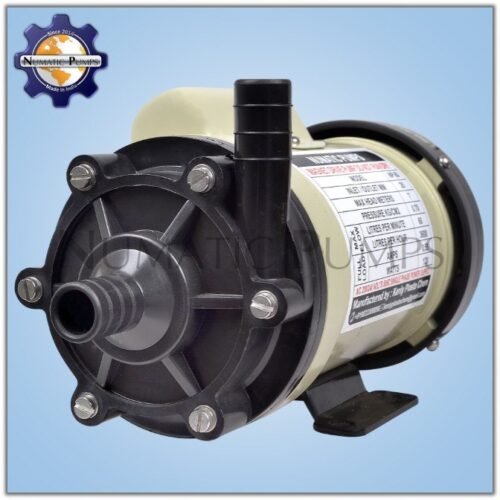
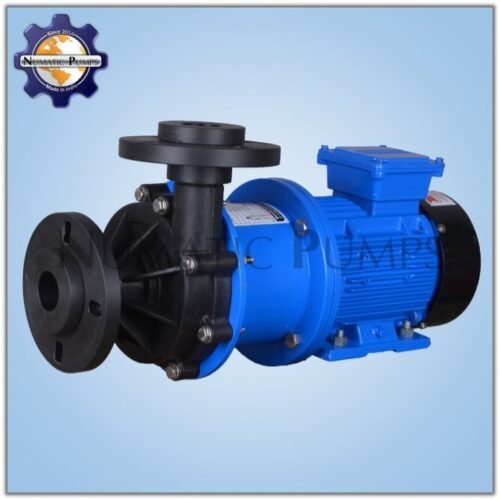
Reliable manufacturers of PP magnetic pumps in Mumbai, India. With one significant exception—the motor is connected to the pump via magnets rather than a direct shaft—magnetic pumps are comparable to standard pumps. Additionally, they have a containment shell to ensure sealing even without a shaft seal. If the shaft seal is damaged, this is done to prevent hazardous material from leaking. Because they don’t require mechanical seals, they are more economical, efficient, and simpler to maintain.
Magnetic pumps are an obvious choice for chemical handling applications that are challenging to seal, especially when dealing with potentially hazardous, volatile, highly corrosive, acidic, and costly liquids.
Here are some additional useful information on magnetic pumps:
Magnetic pumps are also known as mag-drive pumps, magnetically coupled pumps, or sealless pumps. It is use a magnetic coupling to transfer power from the motor to the impeller, eliminating the need for a shaft seal. They are typically used in applications that require a leak-proof seal, such as the handling of hazardous or corrosive fluids. They are hermetically sealed, which means they can operate in environments that are not suitable for traditional centrifugal pumps. The impeller in a magnetic pump is typically a centrifugal pump impeller, which uses centrifugal force to move the fluid from the inlet to the outlet.
These pumps are constructed from materials such as polypropylene, PVDF, or ETFE, which are resistant to corrosion and chemical attack. They are relatively low-maintenance, but it is important to periodically inspect the pump and replace any worn or damaged parts.
All these pumps are typically more expensive than traditional centrifugal pumps due to their specialized design and materials of construction. They are available in a wide range of sizes and configurations, including vertical and horizontal models. Proper installation and maintenance are important to ensure the efficient and safe operation of pumps.
It is also known as mag-drive pumps or magnetically coupled pumps, are a type of centrifugal pump that uses a magnetic coupling to transfer power from the motor to the impeller, without the need for a direct physical connection. This hermetically sealed design eliminates the need for a shaft seal, making them suitable for handling hazardous or corrosive fluids.
These are commonly used in industries such as chemical processing, pharmaceuticals, and semiconductor manufacturing, where the handling of hazardous or corrosive fluids is required. They are also used in aquariums, water treatment facilities, and other applications where a leak-proof seal is necessary.
The impeller in a magnetic pump is typically a centrifugal pump impeller, which uses centrifugal force to move the fluid from the inlet to the outlet. The housing of the pump is typically made from materials such as polypropylene, PVDF, or ETFE, which are resistant to corrosion and chemical attack.
Magnetic pumps offer several advantages over traditional centrifugal pumps, including their hermetically sealed design, which eliminates the need for a shaft seal that can leak and cause environmental problems. They are also energy-efficient, low-maintenance, and relatively quiet.
Magnetic pumps frequently facilitate the transfer of hazardous chemicals and acids in various fluid-handling applications. As compared to other centrifugal pumps magnetic drive pumps are easy to install, repair, and clean but however, but these magnetic pumps have some limitations. They are not suitable for handling high-viscosity fluids or solids, and they are typically more expensive than traditional centrifugal pumps due to their specialized design and materials of construction. Proper installation and maintenance are also important to ensure the efficient and safe operation of magnetic pumps.
It is also known as mag-drive pumps or magnetically coupled pumps, are a type of centrifugal pump that uses a magnetic coupling to transfer power from the motor to the impeller, without the need for a direct physical connection. This hermetically sealed design eliminates the need for a shaft seal, making them suitable for handling hazardous or corrosive fluids.
It is used as a magnetic field to drive the movement of the fluid being pumped, instead of a traditional motor and mechanical seals. These pumps are often used in applications where leakage of the pumped fluid could cause contamination, corrosion, or other hazards.
The basic components of a magnetic pump include an outer casing or housing, an inner rotor, and an outer magnet assembly. The rotor is typically made of a magnetic material, such as neodymium, and is connected to the impeller, which is responsible for moving the fluid. The magnet assembly, on the other hand, is typically made up of a set of permanent magnets that are arranged in a specific pattern around the rotor.
As the outer magnet assembly rotates around the rotor, the magnetic field it generates causes the rotor and impeller to also rotate, thus pumping the fluid through the pump housing. The absence of a mechanical seal or other rotating parts in contact with the fluid being pumped means that there is no risk of fluid leakage or contamination due to seal wear or failure.
In addition to their leak-proof design, magnetic pumps are also highly efficient and require minimal maintenance. However, they are generally not suitable for high-pressure or high-temperature applications, and may be limited in terms of flow rate and fluid viscosity.
Thank you for visiting our website and your interest in our products and services. If you have any further questions or would like more detailed please feel free to contact us.
Estd. 2014 © 2026 Numatic Pumps (All rights reserved)
Estd. 2022 © 2026 Unico Pumps (All rights reserved)