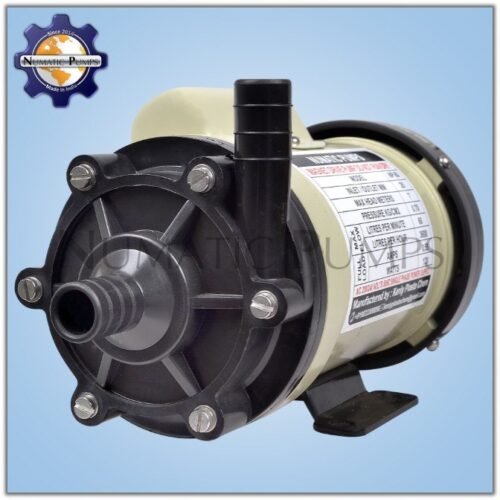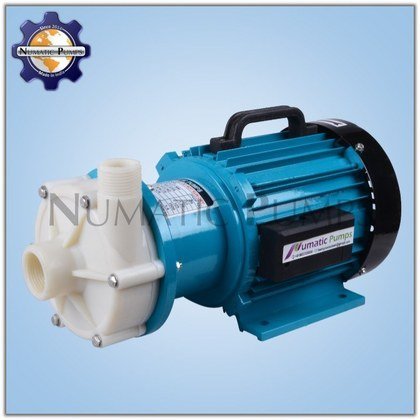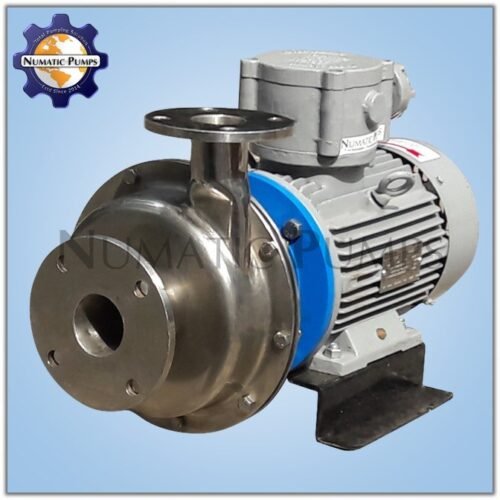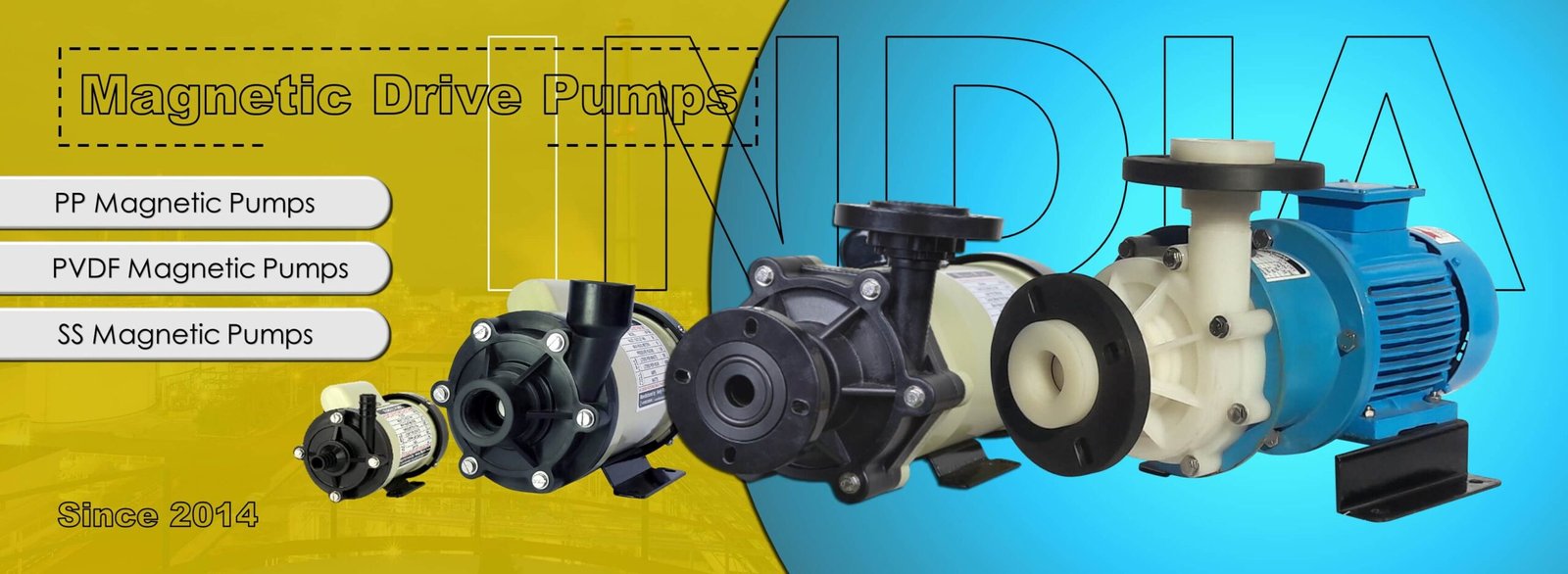
In Mumbai, India, we are one of the top producers of magnetic drive pumps. In terms of material and size, we offer an extensive selection of magnetic drive pumps. PP, PVDF, and SS magnetic drive pumps are among our selection of magnetic drive chemical pumps. We provide magnetic drive pumps in every size, ranging from 15 LPM to 650 LPM.
Magnetic drive pumps are the ideal choice for handling certain types of fluids that might be hazardous if they leak or are generally destructive, such as corrosive acids, poisonous chemicals, fuels like gasoline and kerosene, colors, etc. Its magnetically driven design eliminates the need for shaft sealing, which boosts efficiency and reduces operating costs. The pump drive and motor drive are connected by powerful magnets, which stop hazardous liquids or gasses from escaping and causing harm. They come in a range of configurations depending on the kind of connection (long or near) and are easy to use and maintain.
A Magnetic Drive Pump (Mag Drive Pump) is a sealless centrifugal pump designed to transfer liquids without a conventional mechanical shaft seal. Instead of transmitting torque through a direct mechanical shaft connection, the pump uses magnetic coupling technology to transfer rotational power from the motor to the impeller.Magnetic drive pumps are commonly available in close-coupled (monoblock) and frame-mounted/coupled configurations. In a close-coupled design, the pump is directly mounted to the motor, providing a compact and efficient assembly. In a frame-mounted configuration, the pump and motor are connected through an external coupling, while the internal magnetic coupling transfers torque to the impeller.
A Magnetic Drive Pump (Mag Drive Pump) is a sealless centrifugal pump designed to transfer liquids without a conventional mechanical shaft seal. Instead of transmitting torque through a direct mechanical shaft connection, the pump uses magnetic coupling technology to transfer rotational power from the motor to the impeller.Magnetic drive pumps are commonly available in close-coupled (monoblock) and frame-mounted/coupled configurations. In a close-coupled design, the pump is directly mounted to the motor, providing a compact and efficient assembly. In a frame-mounted configuration, the pump and motor are connected through an external coupling, while the internal magnetic coupling transfers torque to the impeller.
No conventional rotating shaft seal
Reduced risk of process-fluid leakage
Suitable for many corrosive chemicals
Useful for hazardous or valuable liquids
Reduced seal-related maintenance requirements
Avoid claiming that every magnetic-drive pump is universally “100% leak-proof”; phrase it as “designed to minimize or prevent leakage from a conventional shaft seal.”
* Drive Magnet Assembly – connected to the motor shaft and responsible for transmitting rotational torque.
* Inner Magnet Assembly – mechanically connected to the impeller.
* Containment Shell / Rear Casing – a pressure-retaining barrier that separates the rotating drive magnet from the internal magnet assembly.
* Impeller – converts the mechanical energy transmitted by the magnetic coupling into hydraulic energy.
* Pump Casing – directs the pumped liquid through the suction and discharge passages.
As the motor rotates the external drive magnet, its magnetic field passes through the containment shell and synchronously rotates the internal magnet assembly. The internal magnet is connected to the impeller, causing the impeller to rotate without any physical shaft penetration through the pump casing.
The primary engineering advantage of a magnetic drive pump is the elimination of the dynamic mechanical shaft seal, which is one of the most common leakage and maintenance points in conventional centrifugal pumps.
Because there is no rotating shaft seal exposed to the pumped liquid, Mag Drive Pumps provide:
* Leak-free and sealless fluid containment
* Reduced risk of fugitive emissions
* Improved operator and environmental safety
* Elimination of mechanical seal replacement
* Reduced maintenance requirements
* Reliable handling of corrosive, toxic, volatile, or hazardous fluids
The containment shell forms a static barrier between the pumped fluid and the atmosphere. This design is particularly advantageous in chemical-processing applications where even small quantities of leakage can create safety, environmental, or product-contamination concerns.
The magnetic coupling must be correctly sized for the required operating torque. Operating outside the pump’s specified conditions can result in magnetic decoupling, excessive temperature rise, reduced hydraulic performance, or damage to internal components.
In many magnetic drive pump designs, a controlled portion of the pumped liquid is circulated through the internal magnetic coupling area. This circulation can provide lubrication and cooling for internal components and bearings.
For this reason, correct pump operation is important. Dry running should generally be avoided, particularly in designs where the pumped liquid provides cooling and lubrication for internal components. Proper priming, minimum flow, fluid compatibility, and operating conditions are essential for achieving optimum service life.
Magnetic drive pumps can be manufactured using materials selected according to the chemical and thermal characteristics of the pumped liquid. Common materials include:
* Polypropylene (PP)
* PVDF
* PTFE-lined materials
* Stainless steel
* Alloy materials
* Ceramic and advanced engineering plastics for internal components
Material selection depends on chemical compatibility, concentration, operating temperature, pressure, specific gravity, and abrasion characteristics of the process fluid.
Magnetic drive pumps are widely used where zero or extremely low leakage risk is a critical requirement, including:
* Chemical processing
* Acid and alkali transfer
* Electroplating and surface treatment
* Pharmaceutical processing
* Water and wastewater treatment
* Semiconductor and electronics manufacturing
* Scrubber and pollution-control systems
* Laboratory and process equipment
* Corrosive chemical circulation
* Solvent and hazardous-liquid transfer
The combination of centrifugal pumping and magnetic coupling technology provides a number of engineering advantages:
Sealless Construction: No conventional mechanical shaft seal, significantly reducing the potential for leakage.
Reduced Maintenance: Elimination of routine mechanical seal replacement can reduce maintenance intervention and downtime.
Enhanced Containment: The containment shell isolates the pumped liquid from the atmosphere.
Corrosion Resistance: Suitable material selection allows the pump to handle a wide range of aggressive chemical fluids.
Compact Design: Close-coupled configurations provide a space-efficient pumping solution.
Environmental Protection: Sealless operation can help minimize fugitive emissions and accidental chemical release.
A magnetic drive pump is a pump that is driven by magnets rather than electricity from an outside source. Magnetic drive pumps are energy efficient and operate without the use of mechanical shaft seals. Magnetic drive pumps circulate fluids such as chemicals, acids, water, and lubricants. Because a magnetic drive pump has no mechanical shaft seal, the possibility of harmful chemical spills or the pump overheating due to obstruction is removed.
A revolving impeller installed in an enclosed housing propelled by a rotating magnetic field created by individual magnets is one of the general features of a magnetic drive pump. The rotation of the impeller generates a force that propels liquid through and around the pump’s housing. The pump’s primary function is to maintain energy and motion in a fluid. This prevents water or other liquids in a pond or tank from becoming stagnant.
Magnets are attached to the impeller and motor of a magnetic drive chemical pump. The pump’s driving assembly is fitted with permanent magnets. The drive magnet, which drives the inside rotor, is coupled to a second shaft that is powered by the motor. When the motor is turned on, its magnet rotates. The magnetic force generated by the motor’s magnet forces the magnet on the impeller to spin and rotate.
A magnetic pump has several advantages that stem from its simple design. The biggest advantage of a magnetic drive chemical pump is that it has less maintenance, A magnetic drive pump can operate normally for more than ten years without needing to be repaired. There are no costs for seal replacement or maintenance, as well as the risk of costly downtime if there are no seals. O-rings and bearings, on the other hand, can be checked regularly (even every year or two) to ensure there is no wear. The other advantage of a magnetic drive pump is its reduced risk of leaks and fines, Hazardous fluids can be pumped without fear of leakage or vapors emissions. This allows the plant to avoid costly EPA fines while also protecting employees from the risk of exposure to toxic chemicals or explosive fluids. Because the simplified coupling magnetic drive pump or motor does not need to be aligned, the coupling is very simple. Magnetic drive pumps are reliable and dependable and perform as expected.
The rotor winding of a canned motor pump is encapsulated in a ‘can,’ and it, as well as the entire drive shaft up to the impeller, is immersed in the pumped fluid. Canned motor pumps are typically smaller in size, have fewer bearings, and are more efficient. Secondary containment is also included as standard: if the ‘can’ is ruptured, the pumped medium is contained within the stator housing. This can be especially useful if the pumped medium is so dangerous or expensive that secondary containment is required. Secondary containment is available on some magnetic pump designs, but it is usually an extra cost. The main disadvantage of canned motor pumps is that if the motor fails, the entire unit must be replaced. Because the motor is not an integral part of the pump, a magnetic drive pump can be repaired or upgraded. Slurries, liquids at high and low temperatures, and volatile fluids can all be handled by canned and magnetic drive pump designs. Often, the choice of pump is solely determined by site standards or preferences.

Magnetic drive pumps, also known as magnetically coupled pumps, differ from traditional pumping styles in that the electric motor (the driver) is magnetically coupled to the pump rather than via a direct mechanical shaft. The pump is powered by a drive magnet, which eliminates the need for shaft sealing. This is a significant benefit. Magnetic drive pumps, on the other hand, cannot be used in some applications and have power rating limitations. This article discusses magnetic drive pumps in processing facilities, as well as their characteristics, benefits, and drawbacks.
Pumps are typically divided into two types: conventional-sealed pumps and seal-less pumps. The first category includes pumps that require a sealed system, typically in the form of a mechanical seal. The second category contains all types and models of seal-less pumps, which do not require a seal. Magnetic-driven pumps are a popular type of seal-less pump. They are used in services where leaks are unacceptable or liquids are difficult to seal.
Magnetic drive pumps have some limitations because they use magnets to transfer torque and power from the drive assembly to the impeller assembly. Magnet materials, for example, can lose their magnetism when exposed to temperatures above their melting point. As a result, the temperature characteristics of each service are critical. The magnetic coupling causes some energy to be lost. This is due primarily to magnetic resistance. Because of this and other factors, a typical magnetic drive chemical pump is typically less efficient than conventional centrifugal pumps. There are some power rating limitations because a very large or powerful magnetic coupling is neither feasible nor cost-effective. When choosing these pumps, power and torque limitations should always be taken into account. One of the major drawbacks of magnetic drive pumps is the risk of running dry. Because the pumped liquid acts as a lubricant and coolant, in the event of a dry run, the bearing and some other parts may overheat and become damaged. Magnetic drive pumps should not be used in services or applications where there is a risk of dry running.
Magnets must be properly sized so that the magnetic-coupling breakaway torque is not exceeded during startup or in any other potential transient operational cases. If the breakaway torque is exceeded, the magnetic coupling between the drive and driven assemblies is lost, and the impeller stops spinning, requiring the pump to be tripped to allow the magnets to recouple. Magnetic Drive Pumps are also extremely sensitive to transient conditions such as low flows and operation close to the shutoff head. Magnetic drive pumps are commonly used in applications where leakage of the pumped liquid poses a significant risk, such as with aggressive or risky liquids, exotic materials, acids, alkalis, corrosives, pollutants, and toxins. They are also used for ultra-pure liquids and liquids that are difficult to seal. Sealed pumps used for these services may leak over time or require complex, expensive double seals to prevent hazardous/challenging liquids from escaping into the atmosphere, posing safety risks, downtime, and increased maintenance requirements.
Another important application for magnetic drive pumps is for difficult liquids; for example, certain liquids can crystallise on seal faces, causing seal failures. A permanent flush system should be run to the seal to avoid this. However, this can raise the cost of maintenance, seal flushing liquids, and energy consumption. A magnetic drive pump is a better solution for these difficult services.
Because there is no direct connection between the electric motor shaft and the impeller in magnetic drive pumps, no seal is required. Unless the pump casing is broken, there is no risk of leakage. Seals are a common cause of pump trips and unplanned shutdowns. The removal of seals significantly improves pump performance, reliability, and availability. The risk of leakage is eliminated, allowing liquids to be pumped without spillage. By removing the seals, you eliminate the associated friction loss, wear, costs, and noise. This allows for complete separation of liquid from the pump drive and improved motor power transfer to the pump. Because the pump chamber is completely separated from the electric motor by a large air gap, there is virtually no heat transfer from the electric motor; this acts as an effective barrier between the two. Any shocks or spike torques will be softened by the magnetic coupling. Even in extreme circumstances, it will serve as a fuse. Magnetic couplings can be temporarily broken if the pump’s load is too great. In practise, this means that the pump is not overloaded and damaged. Most metallurgies and materials, metallic and nonmetallic, are available for magnetic drive pumps. Pumps with polymer linings are also used because they are more corrosion resistant. Polytetrafluoroethylene (PTFE), perfluoroalkoxy alkanes (PFA), and polyvinylidene fluoride are polymer coating options (PVDF). These lined or non-metallic options are typically used for normal temperatures, typically below 90°C. For even higher temperatures, metallic magnetic drive pumps have been used.
Magnetic Drive Pumps are used in various industries where leakage is a major concern, particularly with hazardous, corrosive, or expensive liquids. Therefore, these devices are truly useful and play a more significant role in order to prevent significant losses.
Magnetic Drive Pumps are used extensively in various industries and applications to efficiently transfer chemicals from one storage location to other in a safe and systematic manner. Some Industries which rely heavily on Magnetic Drive Pumps are chemical, food processing, petroleum, power generation and mining industries among others. Common applications include effluent treatment, corrosive liquid management, scrubbing, heating, air conditioning, electroplating, etc. Magnetic Drive Pumps facilitate smooth chemical conversion during product manufacture. Different varieties of chemical process pumps are available to suit the varying operational requirements of different industries.
The different types of chemical pumps include centrifugal, metering, and positive displacement pumps which have specific, varying methods to move fluids. Some pumps have shaft seals to prevent leakage while others may be seal-less or magnetic drive pumps. An ordinary mechanical pump uses a mechanical seal which has the drawback of getting worn out due to friction or wear and tear over continual use. This is potentially risky as hazardous chemicals may leak into the outside environment via the damaged seals. Magnetic Drive Seal-less pumps overcome this drawback by completely enclosing the wet-end of the pump. This eliminates the need for a seal and makes seal-less pumps the ideal choice for systems dealing with hazardous liquids.
One of the most popular and effective type of seal-less process pumps are magnetic drive pumps. They are the best option when safety and environmental considerations are paramount, as is the case when handling special categories of chemicals which may be harmful by nature or which may be hazardous if leakage occurs, such as corrosive acids, toxic chemicals, fuels like kerosene and petrol, dyes, etc. Magnetic drive pumps are similar to standard pumps, but with one major difference – the motor is connected to the pump by means of magnets instead of a direct shaft. Instead of a shaft sealing, they have a containment shell to ensure sealing. Neodymium magnets are fixed to the motor shaft and they turn in synchronization with the impeller, creating a magnetic connection which conducts the motor’s torque to the impeller, thus eliminating the need for a seal. The purpose of this is to prevent any leakage of hazardous material in case of damage to the shaft seal. They are more efficient as well as cost-effective and easier to maintain as they do not use mechanical
seals.
The wetted parts in magnetic drive pumps are made of corrosion-resistant metallic as well as non-metallic materials or are shielded by resistant rubber or plastic layers. In specific applications where using metal is not an option, these pumps may be made of PP (Polypropylene), PVDF (Polyvinylidene Fluoride) or PTFE (Polytetrafluoroethylene Elastomers). These materials can be trusted to handle most kinds of liquids including toxic and aggressive chemicals, viscous fluids, strong acids and solvents.
• Magnetic Drive Pumps have lesser maintenance and reduction in costs
In normal pumps, the seal is the major cause of issues, holdups and unplanned downtime. As a seal is not needed in magnetic drive pumps, the time, labour and cost involved in repair / replacement of the seal is eliminated. Typically Magnet Pumps can perform effectively for over a decade before needing an overhaul. Thus magnetic drive pumps provide a higher degree of availability, reliability and efficiency while helping in reducing operational costs.
• Increased Safety
Chemical process pumps are typically used to transfer fluids such as hazardous chemicals. There is always a risk of toxic leaks or vapour emissions which may happen due to a worn-out seal. Being seal-less, magnetic drive pumps ensure that this risk is mitigated, and that both workers and the environment stay protected at all times. In addition, magnetic drive pumps ensure that chemical processing plants can comply with all the health, safety and environmental regulations that are imposed by the government and other regulatory authorities.
• Superior Design and Corrosion Resistance
Designed and constructed of materials which ensure durability and reliability, magnetic drive pumps are long-lasting and can overcome most of the issues which occur with other types of pumps, such as running dry. Separate contained areas for the motor and the impeller create a hermetically sealed housing for the pumped fluid, ensuring that even aggressive and corrosive fluids are transferred with no danger of leakage.
Summary
Magnetic drive pumps are accepted widely as the standard for chemical process pumps where
hazardous chemicals need to be transferred with due regard to safety and cost-effectiveness.
Continuous research and development has helped to enhance the magnetic drive pump design over time,
making Magnetic Pump more compact and efficient in order to manage changing industry requirements.
Estd. 2014 © 2026 Numatic Pumps (All rights reserved)
Estd. 2022 © 2026 Unico Pumps (All rights reserved)